Retail Fitout Cost Sydney 2026: $80K–$1.5M+ Guide
Planning a retail fitout in Sydney in 2026 means navigating a construction market where costs are still elevated, lead times are longer than operators expect, and the gap between a quote that wins the job and a quote that reflects reality can be significant.
This guide focuses on the retail fitout construction cost: the building works, joinery, flooring, lighting, compliance, and approvals. It also covers a question most guides ignore: who actually pays for a retail fitout, and how landlord contributions work in Sydney leasing deals.
Important: The pricing ranges in this guide are broad indicative figures only. Retail fitout costs in Sydney fluctuate significantly due to inflation, cost of materials at the time of build, market conditions, labour availability, the level of detail and finish the client wants, and the specific site conditions. No guide can give you an accurate number for your project. The only way to get real clarity is to speak with an experienced industry specialist who has walked your specific site. That conversation will tell you more in 30 minutes than any published figure can.
Why Retail Fitout Costs in Sydney Vary So Much
Two retail tenancies with identical floor plans in the same shopping centre can produce fitout costs that differ by hundreds of thousands of dollars. The variables are that significant.
A heritage terrace on King Street Newtown requires a completely different approach from a shell tenancy in a new Westfield development. A fashion boutique with custom joinery throughout has a different cost profile from a service retailer with minimal fixtures. A tenancy that requires full HVAC replacement sits in a different budget category from one with existing services in good condition.
Construction costs for a retail fitout in Sydney currently range from approximately $1,200 to $3,500 per square metre depending on specification level, with highly detailed or bespoke projects sitting above that range. In 2026 these figures are being pushed higher by ongoing labour shortages, material cost increases, and supply chain pressure. Treat any published figure as a starting point, not a budget.
The Variables That Drive Retail Fitout Costs in Sydney
The Site and Its Existing Condition
The condition of your tenancy before construction starts is one of the biggest cost variables in any retail fitout. Key site factors include:
- What services are already in place including electrical capacity, HVAC, plumbing, and data
- Whether the space is a new shell tenancy or a former retail or food tenancy
- Ceiling height and whether bulkhead or ceiling works are required
- Floor condition and what preparation is needed before new flooring can go down
- Whether asbestos or hazardous materials are present in older buildings
- Access constraints particularly in shopping centres and heritage buildings
- What landlord requirements apply to the tenancy and the building
A former food tenancy being converted to retail may require significant remediation. A heritage building may restrict what changes can be made to the facade or interior fabric. A shopping centre tenancy comes with landlord specification requirements that add cost regardless of your brand preferences.
Custom Joinery
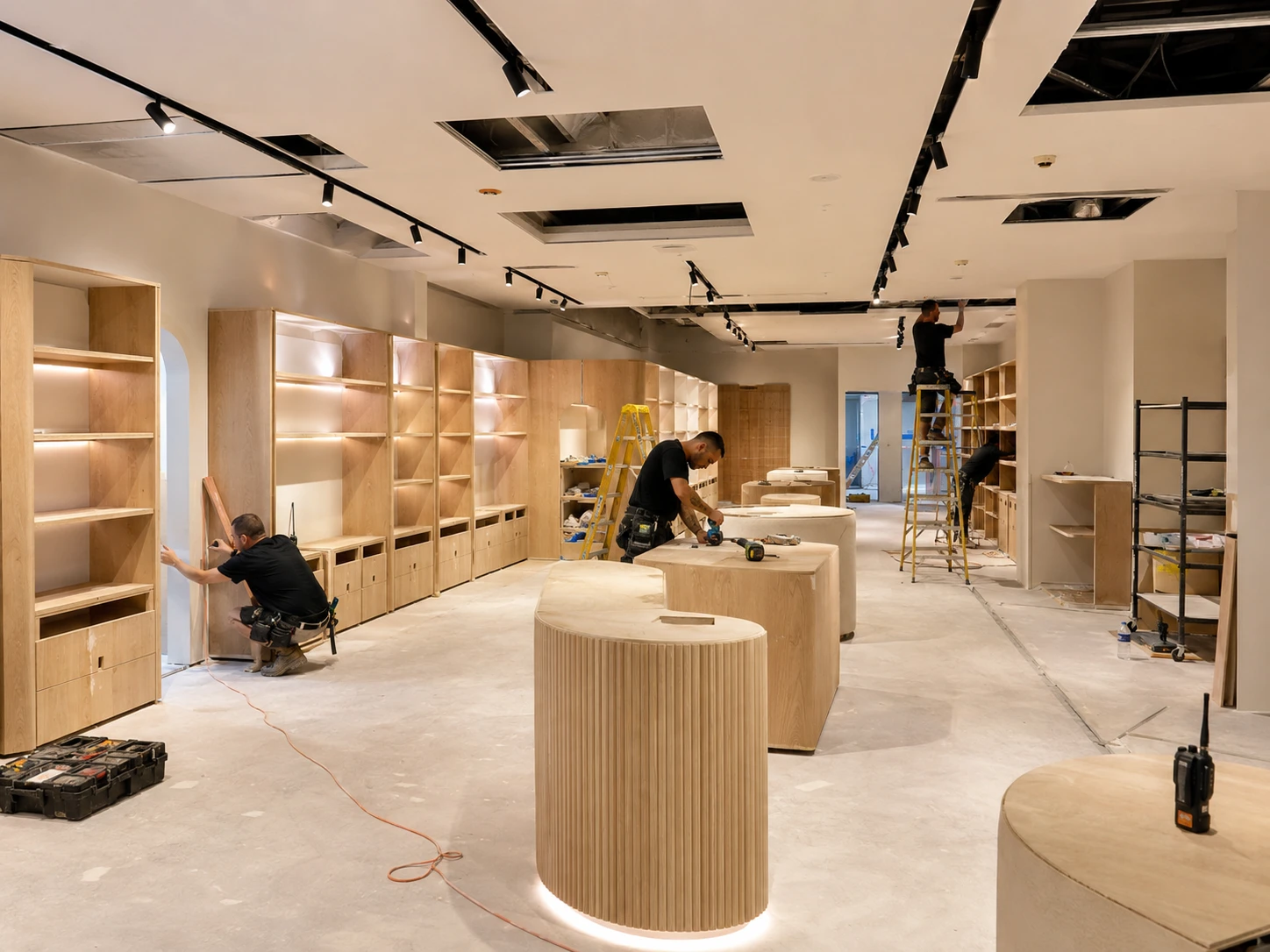
Custom joinery is the single largest variable in most retail fitout budgets. It is also where the biggest cost differences between operators sit. Off the shelf or flat pack joinery costs significantly less than custom built cabinetry but it rarely meets landlord specification requirements, brand standards, or the durability demands of a high traffic retail environment.
Custom joinery in a retail fitout typically covers:
- Display shelving and product presentation units
- Cash wrap and service counters
- Feature walls and brand installations
- Change room cabinetry and joinery
- Storage and back of house cabinetry
- Signage mounting and integration
The specification, material, and finish level you choose for joinery affects not just the upfront cost but the longevity and maintenance cost over the life of the tenancy.
Flooring
Flooring in a retail environment needs to withstand high foot traffic, trolleys, display fixtures, and frequent cleaning. Common retail flooring options and their cost implications:
- Commercial carpet tiles, lower cost, easy to replace in sections
- Vinyl or LVT, mid range cost, durable and easy to clean
- Polished concrete, higher cost, strong brand statement
- Porcelain or ceramic tile, higher cost depending on tile specification
- Timber or engineered timber, premium cost, warm brand positioning
Flooring is one area where landlord specifications can significantly constrain your choices and add cost if the existing subfloor requires preparation work.
Lighting
Retail lighting is both a compliance requirement and a brand tool. The right lighting specification makes product look better, guides customer movement, and communicates brand positioning before a customer reads a single word of signage.
Lighting costs in a retail fitout depend on whether existing lighting infrastructure can be reused, the level of feature versus functional lighting required, integration with building management systems in shopping centres, and emergency lighting compliance requirements.
Compliance and Approvals
Sydney retail fitouts require compliance with building codes and depending on the works involved, DA or CDC approval. Key compliance items include:
- DA or CDC approval where structural or significant works are involved
- Building certification and occupation certificate
- DDA access compliance
- Fire safety systems and annual fire safety statements
- Landlord approval and head lease requirements
- Shopping centre management approval where applicable
The approvals pathway for your specific tenancy depends on the works involved, the zoning, and the building. Getting this wrong before you commit to a lease adds weeks to your programme and delays your trading start date.
Broad Cost Ranges for Sydney Retail Fitouts in 2026
The following ranges are broad indicative figures only covering construction, joinery, flooring, lighting, compliance, and project management. They do not include design fees, equipment, or stock.
These figures are indicative only and are not quotes or estimates. Retail fitout costs in Sydney fluctuate significantly depending on site conditions, joinery specification, finish level, cost of materials at the time of build, market conditions, and labour availability. Two retail fitouts with the same floor plan can produce vastly different construction costs. Do not use these figures for budgeting without speaking to an experienced fitout specialist who has assessed your specific site.
Small Boutique or Pop Up Retail up to 80sqm
A small retail tenancy with standard commercial finishes, basic joinery, and a straightforward approvals pathway.
Broad indicative range: $80,000 to $200,000
What moves this number up: custom joinery throughout, premium finishes, heritage building constraints, shopping centre requirements, tight timeline.
Mid Size Retail Store 80sqm to 200sqm
A mid size retail tenancy with custom joinery, brand aligned finishes, feature lighting, and appropriate compliance for the tenancy type.
Broad indicative range: $200,000 to $500,000
What moves this number up: full HVAC replacement, extensive custom joinery, premium imported materials, complex approvals, flagship brand standards.
Large Format Retail or Flagship Store 200sqm and above
A large format retail tenancy with full custom joinery, premium finishes throughout, feature lighting design, and a complex approvals and compliance programme.
Broad indicative range: $500,000 to $1,500,000 and above
These are broad indicative ranges only. They are being pushed higher by 2026 construction cost escalation across Sydney. They do not constitute a quote or estimate. Speaking with Stephen Spagnol, who has delivered retail fitouts across Sydney for 35 years, will give you far more clarity on your specific project than any published guide.
Who Actually Pays for a Retail Fitout in Sydney?
This is the question most guides do not answer and it is one of the most commercially important questions in any retail leasing negotiation.
The short answer is: the tenant pays, but landlords often contribute.
Landlord fitout contributions are a standard commercial tool in Sydney retail leasing. Landlords use them to attract tenants, reduce vacancy, and secure longer lease terms. The contribution is typically paid as a reimbursement after the tenant has completed the fitout and provided invoices to the landlord.
Key things to understand about landlord fitout contributions:
- They are negotiable and depend on market conditions, the strength of your covenant, and the landlord's vacancy position
- They must be documented in the lease or a separate incentive deed. Verbal agreements are not enforceable
- Most contributions come with clawback provisions. If you exit the lease early you may need to repay some or all of the contribution
- The contribution does not reduce your obligation to complete the fitout to the landlord's specification
- There are tax implications for both parties that should be discussed with your accountant before you sign
The best time to negotiate a landlord fitout contribution is before you sign the lease. Once you have committed to the tenancy your negotiating position disappears.
Planning a retail fitout in Sydney? Building Project Solutions has delivered retail fitouts across Sydney for 35 years. Book a strategy session with Stephen before you sign your lease.
How to Protect Your Budget on a Sydney Retail Fitout
Engage a specialist before you sign the lease. Understanding the site conditions, the approvals pathway, and the realistic construction cost before you commit to a tenancy is the most valuable thing you can do. It also puts you in a stronger position to negotiate landlord contributions.
Get the joinery specification right before going to contract. Joinery is the biggest variable in your budget and the biggest source of variations if it is not documented clearly before construction starts. Every finish, material, dimension, and hardware selection should be agreed in writing before a single panel is cut.
Understand what is and is not included in every quote. Retail fitout quotes vary not just because operators charge different rates but because they include different things. Always ask for a full inclusions and exclusions schedule before comparing quotes. A quote that excludes HVAC, electrical upgrades, or DA fees is not comparable to one that includes them.
Plan your trading start date backwards from your lease commencement. Every week your fitout runs over is a week of rent you are paying before you are trading. The programme needs to be built around your trading start date, not the other way around.
Speak with someone who has done it before, many times. No published guide can substitute for a conversation with an experienced Sydney retail fitout specialist. Stephen Spagnol has delivered commercial fitouts across Sydney for 35 years. That experience will give you more clarity on your specific project than any amount of online research.
Get a real assessment for your retail project. Stephen Spagnol has 35 years of Sydney fitout experience. Contact BPS today for an honest conversation about your project before you commit to anything.
Frequently Asked Questions
How much does a retail fitout cost in Sydney?
As a broad guide, retail fitout costs in Sydney in 2026 range from approximately $80,000 for a small boutique tenancy through to $1,500,000 or more for a large flagship store. These are indicative ranges only and fluctuate significantly due to inflation, material costs, labour availability, joinery specification, and site conditions. The only reliable way to get a real number is a site inspection and conversation with an experienced Sydney fitout specialist.
Who pays for a retail fitout in Sydney?
The tenant pays for the fitout, but landlords commonly offer fitout contributions as a lease incentive to attract tenants and reduce vacancy. These contributions are negotiable and must be documented in the lease or a separate deed before you sign. The best time to negotiate a landlord contribution is before you commit to the tenancy. Once you have signed your negotiating position disappears.
How long does a retail fitout take in Sydney?
As a general guide, retail fitouts in Sydney take 6 to 12 weeks from construction start to trading, depending on scope and complexity. This does not include the approvals phase where required. Shopping centre fitouts may have additional lead times due to landlord approval processes and restricted trading hours for construction works. Every project runs to its own programme.
Do I need DA or CDC approval for a retail fitout in Sydney?
Whether DA or CDC approval is required depends on the specific works, the building, and the council area. Structural changes, changes of use, and significant building works typically require approval. Getting the approvals pathway wrong before you commit to a lease adds weeks to your programme and delays your trading start date. Map your approvals pathway before you sign anything.
What is the biggest cost driver in a retail fitout?
Custom joinery is typically the single largest variable in a retail fitout budget. The specification, material, and finish level you choose for display units, counters, and feature installations has the most significant impact on total project cost. After joinery, HVAC works and the condition of the existing tenancy are the next biggest variables.
Ready to discuss your project?
Our team has 35 years of experience delivering Retail Fitouts across Sydney.
Get in Touch