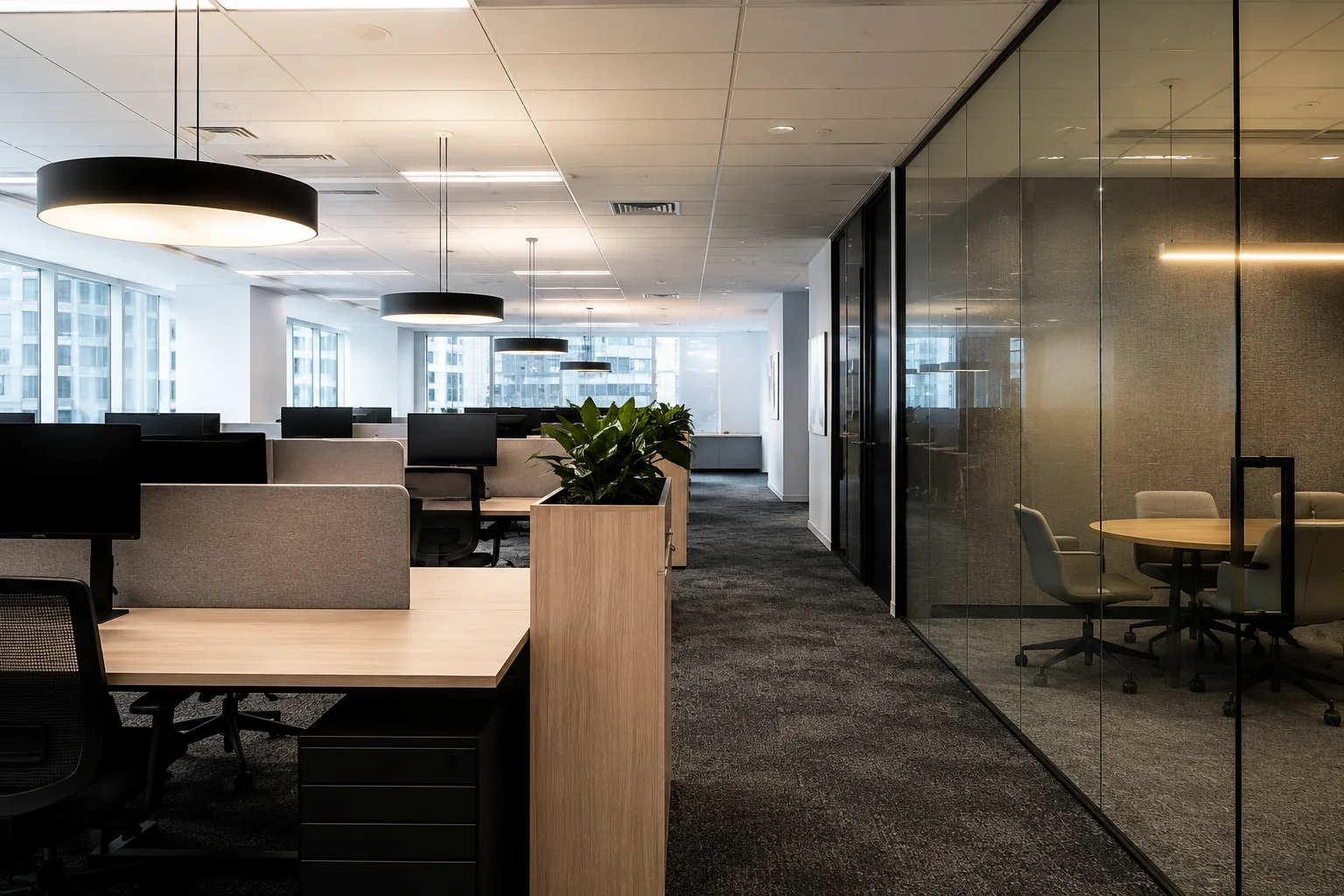
Office Fitout Cost Sydney 2026: $80K–$1M+ Guide
Planning an office fitout in Sydney in 2026 means pricing into one of the most expensive construction markets in the Asia Pacific region. Sydney consistently sits at the top end of fitout costs nationally, and the gap between a published benchmark and what your specific project will actually cost can be significant.
Building Project Solutions has delivered commercial fitouts across Sydney for 35 years across hospitality, medical, retail, gym, and commercial environments. This guide covers what actually drives office fitout costs in Sydney, what broad indicative ranges look like across different project types, and why the only number that matters is the one produced after an experienced specialist has walked your specific site.
Read how Building Project Solutions handles variations and pricing transparency before you commit to anything.
Why Sydney Office Fitout Costs Sit Above Every Other Australian City
Sydney is not Melbourne. It is not Brisbane. The cost of delivering a commercial office fitout in Sydney carries a premium that reflects local labour market conditions, CBD access restrictions, building compliance requirements, and a construction sector that has been operating under sustained cost pressure since 2021.
According to Knight Frank's Asia-Pacific Fit-Out Cost Guide 2026, Sydney has the highest office fitout costs of any Australian city, with many projects landing around $2,665 per square metre and higher specification workplaces moving well above that when scope becomes more services-heavy or design-led. Costs are forecast to rise a further 2 to 5 percent over the next 12 months driven by tightening labour markets, sustainability requirements, and global trade uncertainty.
That is the market you are pricing into. Any guide that gives you a national average without adjusting for Sydney is not giving you useful information.
The Variables That Drive Office Fitout Costs in Sydney
The Site and Its Existing Condition
The condition of your tenancy before construction starts is one of the most significant cost variables in any office fitout. Two key distinctions:
A warm shell tenancy has core services infrastructure already in place, including existing HVAC, electrical distribution, fire systems, and basic ceiling and floor. A cold shell or raw tenancy requires full services installation from scratch. The difference between a warm shell and a cold shell can represent a very significant portion of your total fitout budget before a single partition wall goes up.
Other site factors that move the cost:
Whether existing partitioning, ceiling grid, or flooring can be retained or must be demolished and replaced. Whether existing HVAC capacity is adequate for the new layout or requires upgrade or replacement. Whether fire systems need modification to accommodate the new layout. Any structural change or new partitioning requires careful planning to ensure fire egress and travel distances meet NCC requirements. Whether the building has heritage overlays or landlord specification requirements that constrain material choices.
Partitioning and Layout Complexity
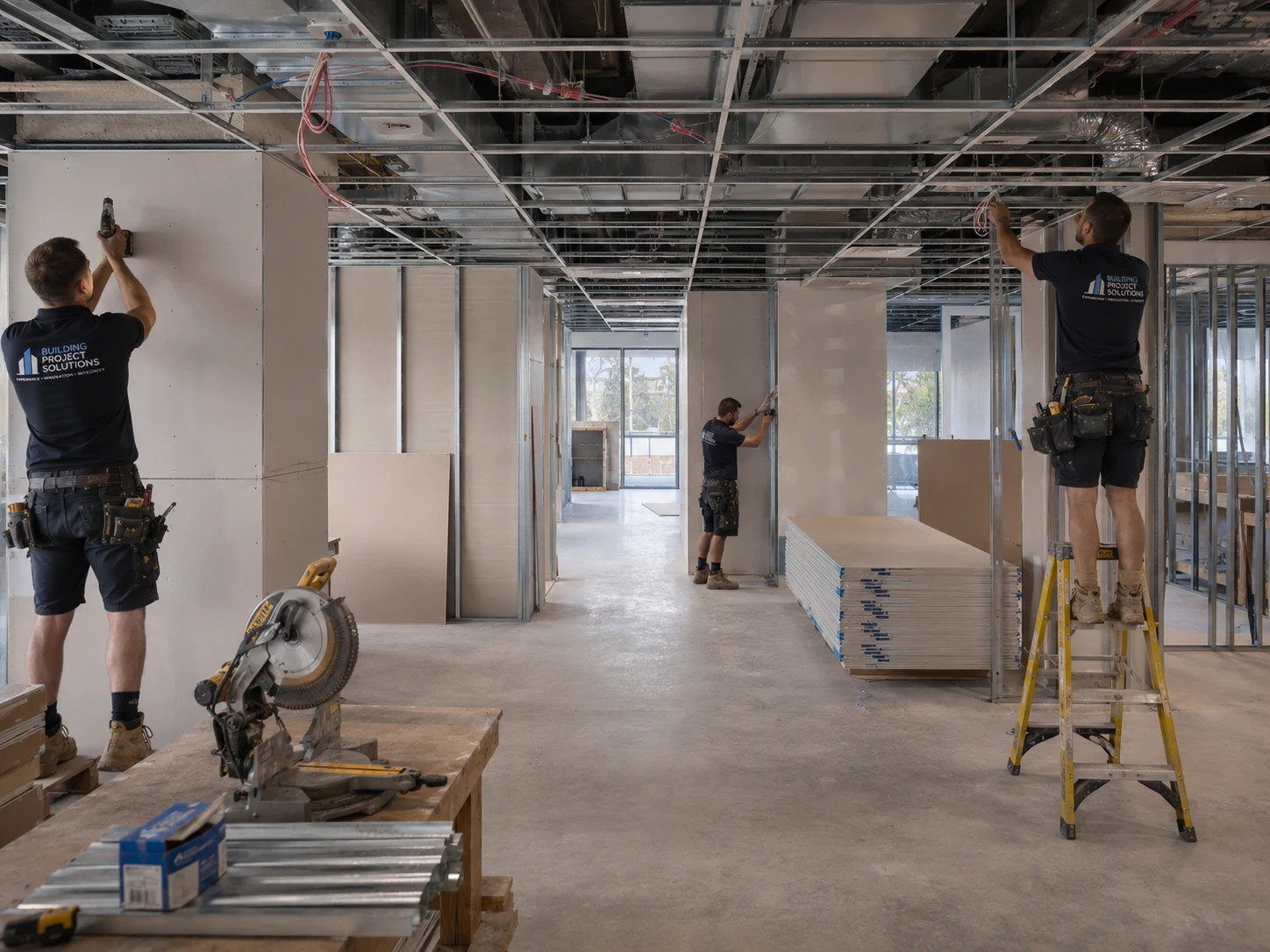
Partitioning is typically the single biggest lever on total office fitout cost. The jump from standard plasterboard partitions to frameless glass is significant. Acoustic glass adds more again.
The layout complexity also drives cost. An open plan fitout with minimal internal walls costs significantly less per square metre than a fitout with multiple private offices, meeting rooms, phone booths, and collaboration zones. Each enclosed room requires its own fire detection, lighting circuit, and data connections. These costs multiply with the number of rooms.
Services: Electrical, Data, and HVAC
Electrical and data infrastructure is frequently the most underestimated cost in an office fitout. It is not just power points. It is the backbone of your business operations.
Key services cost drivers include:
Electrical distribution boards and sub-board upgrades where existing capacity is insufficient. Data cabling: Cat 6 or Cat 6A throughout, dedicated server room cooling where required. HVAC zoning and modifications to suit the new layout. Individual office zones require separate HVAC controls. Lighting design and installation: the gap between standard commercial LED grid lighting and a designed lighting scheme with feature elements is significant. Audiovisual infrastructure in meeting rooms and boardrooms.
Joinery and Fitout Specification
Custom joinery in an office fitout covers reception desks, kitchen and breakout cabinetry, storage walls, and feature installations. The specification level you choose affects every line item.
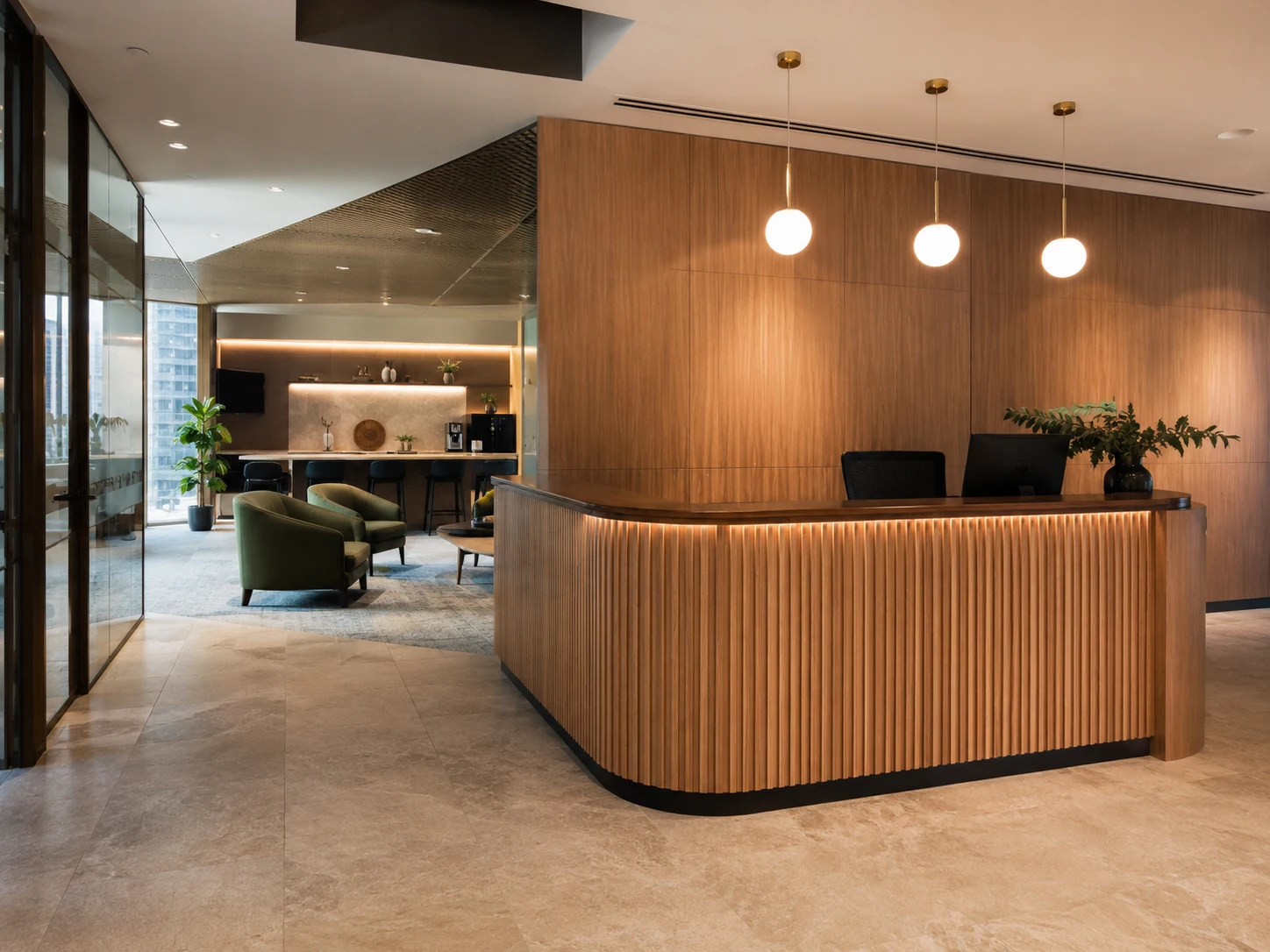
The difference between a standard laminate reception counter and a custom designed joinery reception with stone top, integrated lighting, and brand elements can represent a significant cost difference on the same floor plan. Both are functional. One communicates the brand from the moment a visitor walks through the door.
Compliance and Approvals
Most Sydney office fitouts require either a Development Application or a Complying Development Certificate before construction can start.
A CDC applies when there is no change in building use, for example moving into an office space previously occupied by a similar organisation. A private certifier can issue a CDC relatively quickly when all requirements are met.
A DA is required when there is a change of use, for example converting a retail tenancy to office use for the first time, or carrying out works on a heritage listed building. A DA through the relevant Sydney council typically adds 6 to 12 weeks to the programme before construction can start.
Under the National Construction Code all office buildings fall under Class 5 classification. Key compliance obligations include:
Fire safety and egress: any structural change or partitioning must maintain maximum travel distances to fire exits and must never obstruct designated egress pathways. DDA access compliance: accessible facilities, accessible pathways, and compliant amenities throughout. Acoustic standards: the NCC sets minimum standards for noise reduction between tenancies. Building certification and occupation certificate before the fitout can be occupied.
Tenants are responsible for compliance within their leased area. Landlords remain responsible for base building systems. Major works can blur these boundaries. Altering internal partitions may impact base building fire systems, which creates a compliance obligation that must be managed carefully.
Timeline and Market Conditions
When you price your fitout affects what it costs. Sydney labour markets in 2026 are characterised by specialist trade shortages across electrical, data, and mechanical disciplines. Enterprise bargaining agreements have locked in approximately 5 percent annual wage growth for construction workers for the next three to four years. This is structural cost pressure, not a temporary spike.
Material costs including imported finishes, glass, and specialist joinery components continue to be affected by global supply chain conditions, currency movements, and shipping costs. A project priced today is pricing into a different market from the same project priced in six months.
Level of Finish and Detail
Two offices with identical floor plans can produce fitout costs that differ by hundreds of thousands of dollars based purely on specification level. The decision between standard commercial grade and premium bespoke specification affects every line item including flooring, ceiling, partitioning, joinery, lighting, and services.
The right specification depends on your brand positioning, your client-facing requirements, your staff experience priorities, and your lease term. A five year lease warrants a different specification decision from a ten year lease on the same space.
Broad Indicative Cost Ranges for Sydney Office Fitouts in 2026
The following ranges are indicative only and cover construction, compliance, joinery, services, and project management. They do not include furniture, IT equipment, relocation costs, or design fees unless stated.
Entry Level Office Fitout $800 to $1,200 per sqm
Standard plasterboard partitions, grid ceiling, commercial carpet, LED lighting, and paint. Functional and professional without premium finishes. Suitable for businesses that need a compliant, clean workspace on a constrained budget.
Broad indicative total for a 100sqm tenancy: $80,000 to $120,000
What moves this higher: HVAC upgrade required, additional compliance works, heritage building constraints, CBD access restrictions.
Mid-Range Office Fitout $1,200 to $2,000 per sqm
Custom joinery at reception and breakout, higher specification partitioning, designed lighting scheme, quality flooring, meeting rooms with glass partitions, full data and AV infrastructure.
Broad indicative total for a 200sqm tenancy: $240,000 to $400,000
What moves this higher: Premium glass partitioning, extensive custom joinery, boardroom AV, server room, full HVAC replacement.
Premium Office Fitout $2,000 to $3,500 per sqm and above
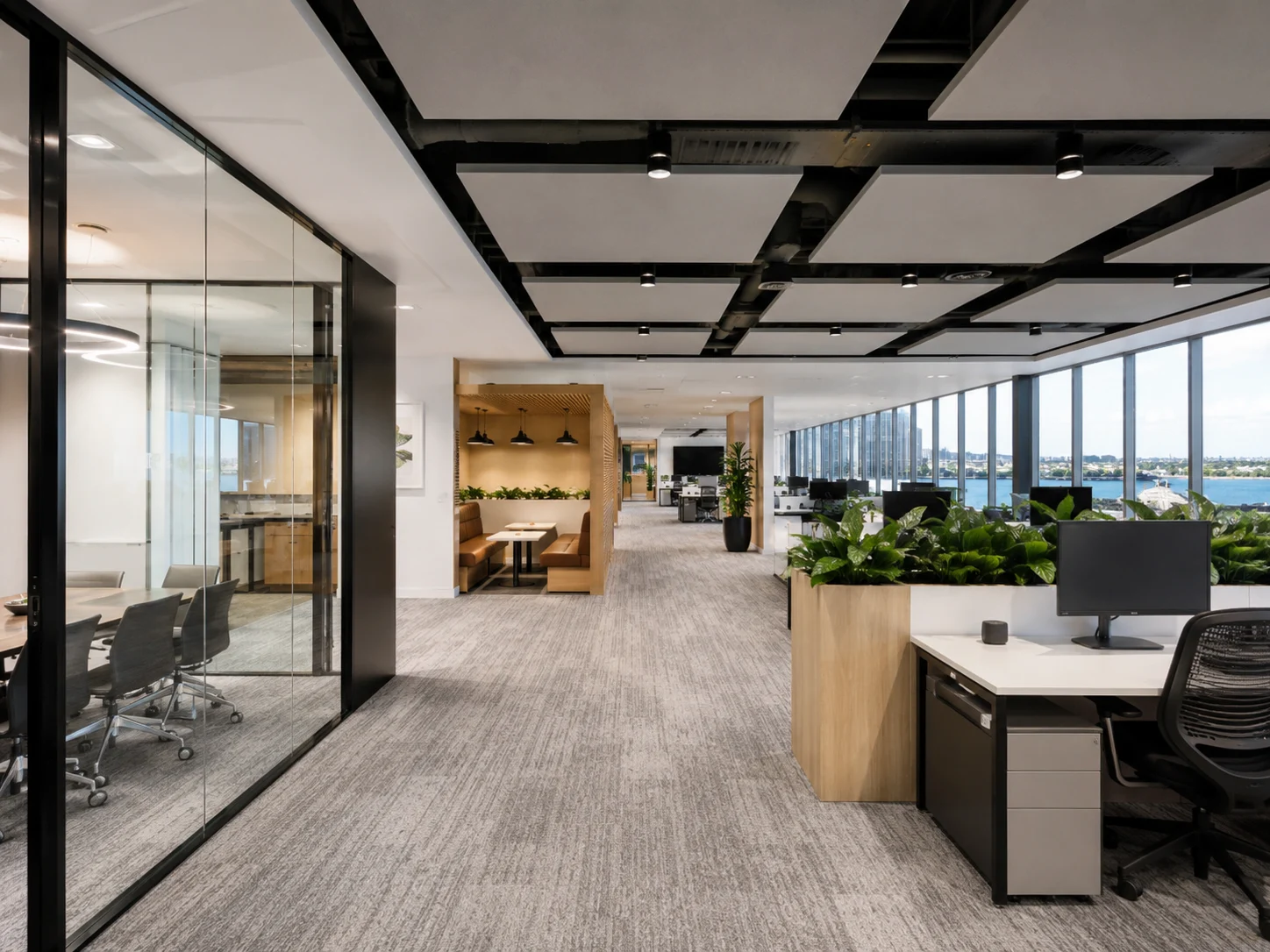
Full custom joinery throughout, premium finishes, frameless glass partitioning, bespoke lighting design, feature reception, high-end breakout and collaboration spaces, full AV integration, and brand-aligned design throughout.
Broad indicative total for a 300sqm tenancy: $600,000 to $1,050,000 and above
Sydney projects at the premium end frequently exceed $3,500 per sqm when scope is services-heavy, the building is heritage listed, or the brief requires bespoke design elements that cannot be sourced from standard commercial suppliers.
Disclaimer: Every cost figure in this guide is a broad indicative range only. It is not a quote, not an estimate, and not a representation of what your fitout will cost. Office fitout costs in Sydney are determined by your specific tenancy, the condition of the existing services, the compliance obligations that apply, the cost of materials and labour at the time your project is priced, market conditions, supply chain, and the level of finish and detail you require. Two offices with the same floor plan in different buildings can produce construction costs that differ by hundreds of thousands of dollars. Nothing in this guide should be relied upon for budgeting, financial planning, lending, or business case purposes. The only way to get a reliable cost assessment for your specific project is to engage an experienced fitout specialist who has physically inspected your site.
Why Getting the Approvals Pathway Right Before You Sign Matters
The approvals pathway decision between DA and CDC is one of the most consequential choices you make before committing to a Sydney office tenancy. Getting it wrong does not just cost money. It costs time, and time is rent you are paying before your business is operational.
A CDC can be issued relatively quickly by a private certifier when the project meets all requirements and there is no change of use. A DA through the relevant Sydney council adds 6 to 12 weeks to your programme before construction can start.
The change of use question is critical. If the tenancy has previously been used for a different purpose such as retail, food service, or a different commercial classification, a DA is typically required regardless of the physical scope of works. Discovering this after you have signed a lease and committed to a construction programme is an expensive lesson.
Map your approvals pathway before you sign anything. It costs nothing at that stage and can save weeks and significant cost compared to discovering a DA requirement after you have committed.
How to Protect Your Budget on a Sydney Office Fitout
Engage a specialist before you sign the lease. The condition of the tenancy, the existing services infrastructure, the approvals pathway, and the realistic construction cost should all be understood before you commit. Once you have signed, your negotiating position disappears and your options narrow.
Understand what is and is not in every quote. Office fitout quotes vary not just because operators charge different rates but because they include different things. A quote that excludes HVAC upgrades, compliance works, or DA fees is not comparable to one that includes them. Always ask for a full inclusions and exclusions schedule before comparing figures.
Get the partition specification right before design is finalised. Partitioning is the biggest lever on your total cost and the hardest to change after construction starts. The decision between plasterboard, framed glass, and frameless glass should be made during design, not during construction.
Plan data and electrical infrastructure early. These are the most commonly underestimated costs and the most disruptive to modify once walls are up and ceilings are in. Every data point location, every electrical circuit, and every AV requirement should be mapped before construction starts.
Lock scope in writing before construction starts. Every variation that emerges during an office fitout costs more than it would have cost to resolve during design. A complete, documented scope agreed in writing before construction starts is the most effective cost control tool available.
Speak with someone who has done it many times. Thirty-five years of Sydney commercial fitout experience means knowing which certifiers move fast, which councils require more documentation, which trades to book early, and which scope items are most likely to produce variations. That knowledge only comes from delivering projects at scale across the city.
Planning an office fitout in Sydney? Building Project Solutions has delivered commercial fitouts across Sydney for 35 years. Book a strategy session with Stephen before you sign your lease. That conversation will tell you more about your specific project than any guide can.
Frequently Asked Questions
How much does an office fitout cost in Sydney?
As a broad indicative guide only, office fitout costs in Sydney in 2026 range from approximately $800 per square metre for an entry level fitout through to $3,500 per square metre or more for a premium bespoke workplace. A 100sqm entry level fitout starts from approximately $80,000. A 300sqm premium fitout can exceed $1,000,000. These are indicative ranges only and should not be used for budgeting without a site inspection from an experienced specialist. Your actual cost depends on site conditions, specification level, services requirements, and market conditions at the time your project is priced.
Why is Sydney more expensive than other Australian cities for office fitouts?
Sydney consistently sits at the top of the Australian market for commercial fitout costs. Knight Frank's Asia-Pacific Fit-Out Cost Guide 2026 identified Sydney as the highest cost city in Australia for office fitouts. The premium reflects local labour market conditions, CBD access restrictions, building compliance requirements, and sustained construction cost pressure. A national average figure is not a reliable benchmark for a Sydney project.
How long does an office fitout take in Sydney?
As a general guide, office fitouts in Sydney take 6 to 14 weeks from construction start to occupation depending on size and complexity. This does not include the approvals phase. A CDC can be issued relatively quickly by a private certifier. A DA adds 6 to 12 weeks before construction can start. Projects in CBD buildings with restricted access hours and shared loading docks may have longer programmes than suburban tenancies. Every project runs to its own timeline.
Do I need DA or CDC approval for an office fitout in Sydney?
Most Sydney office fitouts require either a CDC or a DA. A CDC applies where there is no change in building use and the works meet all CDC requirements. A private certifier can issue this relatively quickly. A DA is required where there is a change of use, works to a heritage listed building, or works that do not meet CDC criteria. Discovering you need a DA after committing to a lease and a construction programme adds weeks and cost that cannot be recovered. Map your approvals pathway before you sign anything.
What is the biggest cost driver in an office fitout?
Partitioning is typically the single biggest lever on total office fitout cost. The specification choice between standard plasterboard, framed glass, and frameless acoustic glass has the most significant impact on project cost. After partitioning, electrical and data infrastructure is the most commonly underestimated cost driver. It is not just power points, it is the entire digital backbone of your workplace. HVAC upgrades and services modifications are the third most significant variable, particularly in older Sydney buildings where existing infrastructure may not support a modern workplace layout.
Ready to discuss your project?
Our team has 35 years of experience delivering commercial fitouts across Sydney.
Get in Touch