Bar & Tavern Fitout Cost Sydney 2026: $150K–$1.5M+ Guide
A bar or tavern fitout in Sydney sits at the complex end of the hospitality construction spectrum. You are not just building a venue. You are building a licensed premises that must satisfy the National Construction Code, NSW liquor licensing requirements, council DA approval, acoustic management obligations, and food premises standards before a single patron walks through the door.
Building Project Solutions has delivered hospitality fitouts across Sydney for 35 years including bars, taverns, restaurants, and licensed venues of every scale. This guide covers what actually drives bar and tavern fitout costs in Sydney in 2026, what broad indicative ranges look like across different venue types, and why the only number that matters is the one produced after an experienced specialist has walked your specific site.
Read how Building Project Solutions handles variations and pricing transparency before you commit to anything.
Why a Bar or Tavern Fitout Is More Complex Than a Standard Hospitality Project
Every hospitality fitout in Sydney carries compliance obligations. A bar or tavern carries more than most.
The liquor licence is the starting point. In NSW a bar or tavern requires either a Hotel Licence, a Small Bar Licence (capped at 120 patrons), or an On-Premises Licence depending on the venue type and operating model. Each licence type has different trading hour permissions, capacity restrictions, and DA requirements. The wrong licence application, or the wrong development consent trading hours, can affect how the physical fitout needs to be designed and built.
The DA for a bar or tavern in Sydney is more complex than a standard commercial DA. Acoustic impact on neighbouring residential properties, late trading hours, patron capacity, and entertainment programming all feature in the assessment. The City of Sydney amended its Development Control Plan in March 2025 specifically to address entertainment sound management, adding acoustic requirements that affect how bars and taverns in the City of Sydney area need to be designed and constructed.
From 2026 the NSW Vibrancy Reforms have introduced new mediation support for significant live music venues, and conditions of development consent that previously prohibited live music outright have been switched off for hotels, clubs, and small bars. This changes what is possible in a bar fitout but it does not remove the acoustic obligations. It changes how they are managed.
All of this compliance infrastructure needs to be understood before you sign a lease, before you engage a designer, and before you brief a builder. Getting it right from the start is significantly cheaper than discovering compliance obligations after construction has begun.
The Variables That Drive Bar and Tavern Fitout Costs in Sydney
Venue Type and Licence Category
The type of venue you are building and the liquor licence category you are applying for directly affect the fitout scope and cost.
A small bar under the NSW Small Bar Licence is capped at 120 patrons. Standard trading hours are 10am to midnight Monday to Sunday. A two-hour extension to 2am can be granted with DA approval. The physical fitout for a small bar is typically more intimate and design-led than a larger hotel or tavern, but the compliance obligations are the same.
A tavern or hotel licence allows larger patron capacities, gaming machines where approved, and extended trading hours. The fitout scope for a tavern is typically larger, more complex, and involves more specialist infrastructure including gaming room fitout where applicable.
An on-premises licence for a bar operating as part of a restaurant or music venue requires the physical environment to satisfy both food premises standards and liquor licensing requirements simultaneously.
Each licence category has implications for the physical design, the DA pathway, the acoustic assessment, and the construction scope.
The Bar Construction Itself
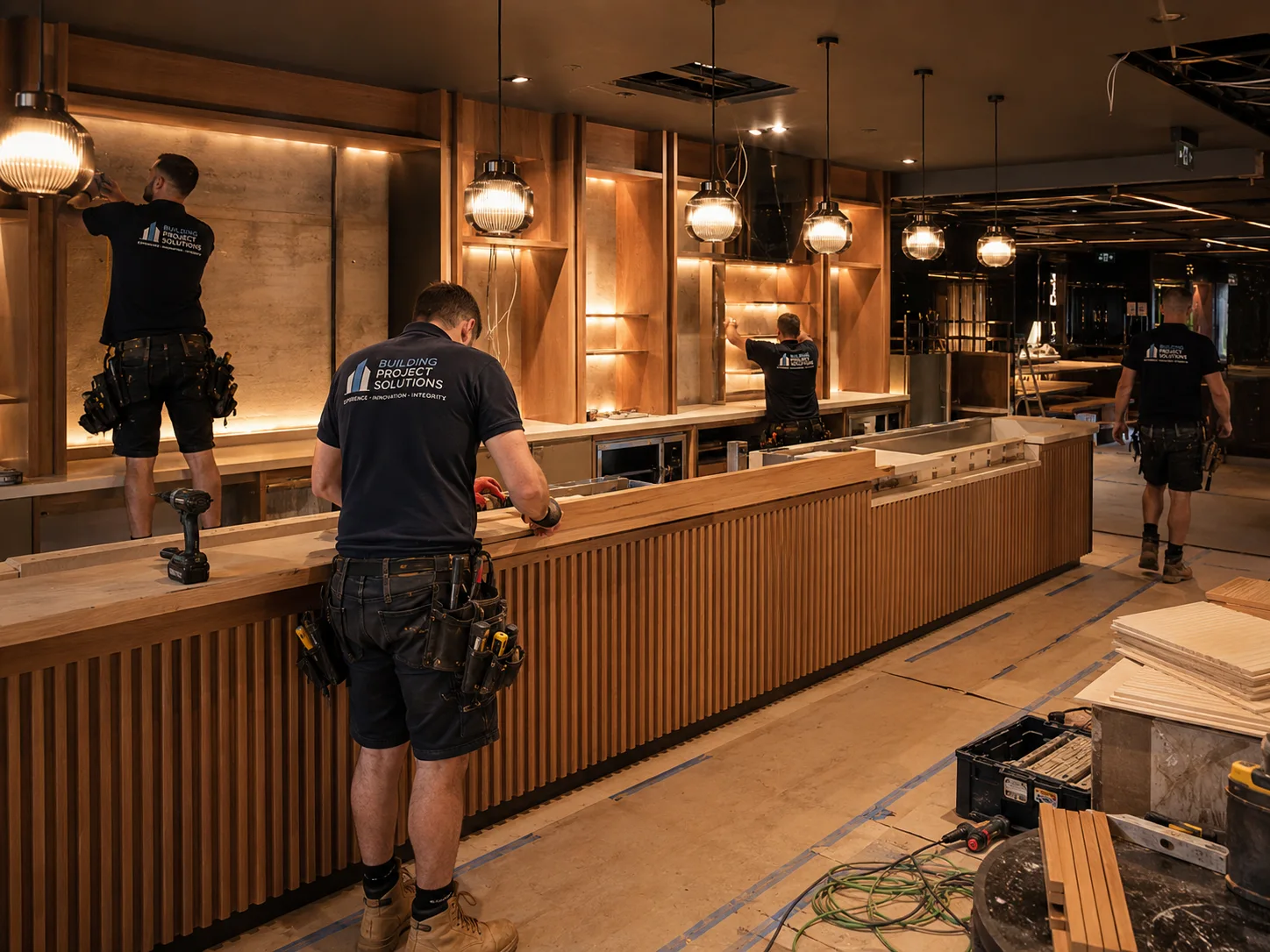
The bar counter and back bar are the highest-cost single elements in most bar fitouts. This is where the largest concentration of specialist trades, custom joinery, specialist refrigeration, and feature finishes converges in the smallest floor area.
A bar counter in a Sydney venue typically involves:
Custom joinery: the bar counter structure, front panels, and back bar shelving are almost always custom built. Off-the-shelf bar equipment does not meet the finish standards of Sydney licensed venues operating at any level above basic.
Integrated refrigeration: under-bench bar fridges, keg systems, and glycol lines for draught beer all need to be coordinated with the joinery design before manufacture begins. Changing the refrigeration specification after joinery is manufactured is a costly variation.
Tap systems and glycol lines: draught beer systems require glycol cooling lines running from a remote keg room or cool room to the taps. The routing of these lines must be planned before construction starts.
Glasswashers: commercial glasswashers require plumbing, drainage, and adequate bench space integrated into the bar design.
Point of sale infrastructure: POS systems, cable management, and power supply at service points need to be coordinated with the joinery and electrical design.
Bar equipment alone in a Sydney licensed venue typically ranges from $40,000 to $120,000 before the surrounding joinery and construction is added.
Acoustic Management
Acoustic management is one of the most significant cost variables in a Sydney bar or tavern fitout and one of the most frequently underestimated.
The City of Sydney DCP 2012, as amended in March 2025, establishes entertainment sound management requirements for venues in the City of Sydney area. An acoustic report is required as part of the DA for most bar and tavern applications in inner Sydney. The acoustic report specifies what noise attenuation measures need to be built into the fitout.
Key acoustic cost items in a bar fitout include:
Wall and ceiling acoustic treatment: achieving required noise reduction between the venue and neighbouring residential properties requires specific wall and ceiling construction specifications. These are not standard commercial construction methods and cannot be added retrospectively without significant disruption and cost.
Mechanical ventilation acoustic attenuation: HVAC systems in bars generate significant noise. Acoustic attenuators on supply and return air systems are typically required.
Door and window acoustic sealing: every door and window opening that faces a noise-sensitive boundary needs acoustic sealing and appropriate hardware.
Acoustic consultant fees: an acoustic consultant engaged early in the design process costs significantly less than one engaged to solve a problem discovered during DA assessment or after construction.
Getting the acoustic design wrong means either failing the DA assessment or being required to retrofit acoustic treatment after the fitout is complete. Both outcomes add cost and delay. Neither is recoverable without significant expense.
Commercial Kitchen Where Required
Not all bars require a full commercial kitchen. A small bar under the NSW Small Bar Licence does not need to serve meals as a condition of the licence, although many operators choose to. A tavern operating under a Hotel Licence typically does include food service, which requires a compliant commercial kitchen.
Where a commercial kitchen is included the cost impact is substantial. A fully compliant commercial kitchen in a Sydney bar or tavern adds $100,000 to $300,000 to the fitout budget before kitchen equipment is procured. This covers:
Commercial exhaust and ventilation canopy system with make-up air. Grease trap installation. Stainless steel benching and equipment bases. Gas installation and certification. Commercial plumbing and drainage to food premises standards. Fire suppression system above cooking equipment where required.
The decision about whether to include a commercial kitchen, and what scope that kitchen needs to operate, should be made before the fitout is designed, not during construction.
Liquor Licence DA and Development Consent
Every new bar or tavern in Sydney requires a Development Application. There is no CDC pathway for a new licensed premises in NSW.
The DA for a bar or tavern is assessed against multiple considerations:
Patron capacity: the DA establishes the maximum patron capacity of the venue. This directly affects how much floor area is required and how the fitout needs to be designed to accommodate safe patron movement and egress.
Trading hours: the DA establishes the permitted trading hours. Standard small bar trading hours are 10am to midnight. Extended trading to 2am requires DA approval. Trading beyond 2am requires a Statement of Risks and Potential Effects lodged with Liquor and Gaming NSW.
Acoustic impact: the DA assessment includes an acoustic impact assessment that must demonstrate the venue will not cause unreasonable noise impact on neighbouring properties.
Entertainment: programming live music or amplified entertainment is subject to the DA conditions and the NSW Vibrancy Reforms. Conditions that previously prohibited live music entirely have been switched off for hotels, clubs, and small bars, but acoustic obligations remain.
DA approval timelines for bar and tavern applications in Sydney are typically 3 to 6 months. Applications in the City of Sydney local government area may take longer where acoustic or amenity impacts are contentious.
Fit, Finish, and Atmosphere
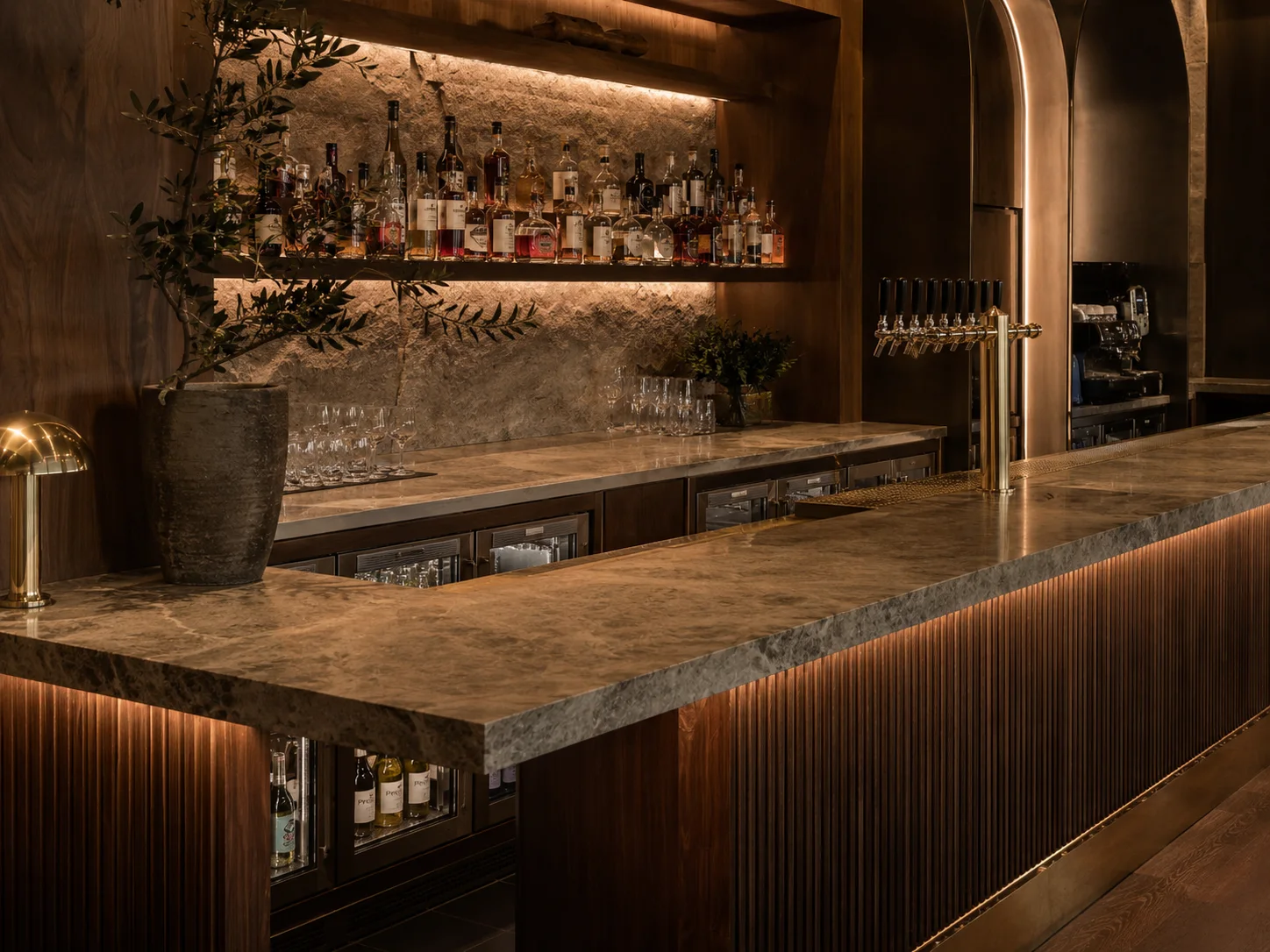
A bar is not a functional space that happens to serve drinks. It is an atmospheric environment that exists to make people stay, return, and spend. The level of finish, the lighting design, the material palette, and the acoustic character of the space are not aesthetic luxuries. They are commercial decisions that directly affect revenue.
The difference between a bar fitted with standard commercial materials and a bar designed with a considered material palette, bespoke joinery, feature lighting design, and acoustic treatment creates not just a different experience but a different price point and a different customer demographic.
The specification level you choose affects every line item in your fitout budget. It should be established before design begins and locked in writing before construction starts.
Broad Indicative Cost Ranges for Sydney Bar and Tavern Fitouts in 2026
The following ranges cover construction, compliance, joinery, services, acoustic management, and project management only. They do not include bar equipment, kitchen equipment, furniture, liquor licence fees, or operating costs.
Small Bar up to 120 Patrons
A small bar under the NSW Small Bar Licence with custom joinery, quality finishes, acoustic treatment, and a straightforward DA pathway.
Broad indicative construction range: $150,000 to $400,000
What moves this number higher: full commercial kitchen, complex acoustic requirements, premium imported finishes, heritage building constraints, late trading DA complexity, tight construction programme.
Mid-Size Bar or Licensed Restaurant 120 to 250 Patrons
A mid-size licensed venue with a full bar, commercial kitchen, quality finishes throughout, and appropriate acoustic management for the location.
Broad indicative construction range: $400,000 to $800,000
What moves this number higher: full commercial kitchen with exhaust and grease trap, gaming room fitout, premium bespoke design, complex acoustic requirements, CBD building access restrictions.
Tavern or Large Licensed Venue 250 Patrons and Above
A full-scale tavern or large licensed venue with multiple service areas, full commercial kitchen, gaming facilities where applicable, and comprehensive acoustic and compliance management.
Broad indicative construction range: $800,000 to $1,500,000 and above
Disclaimer: Every cost figure in this guide is a broad indicative range only. It is not a quote, not an estimate, and not a representation of what your fitout will cost. Bar and tavern fitout costs in Sydney are determined by your specific venue type, your licence category, your DA trading hours, the acoustic obligations that apply to your site, the cost of materials and labour at the time your project is priced, market conditions, supply chain, and the level of finish and detail you require. Two venues with the same floor plan in different locations can produce vastly different construction costs depending on these variables. Nothing in this guide should be relied upon for budgeting, financial planning, lending, or business case purposes. The only way to get a reliable cost assessment for your specific project is to engage an experienced licensed venue fitout specialist who has physically inspected your site and understands the NSW liquor licensing and DA framework.
Why the Liquor Licence and DA Must Be Mapped Before You Sign a Lease
The single most expensive mistake in a Sydney bar or tavern project is committing to a tenancy before the liquor licence pathway and the DA trading hours are understood.
The licence category determines what you can do in the venue. The DA determines when you can do it and at what capacity. The acoustic obligations determine how the venue needs to be built to support both.
Finding out after you have signed a lease that the DA for your intended trading hours will take 6 months, or that the acoustic requirements for your location will add $100,000 to your construction budget, is not a surprise you can absorb after you have already committed.
The right time to map all of this is before you sign anything. It costs nothing at that stage and changes everything about the decisions you make.
Planning a bar or tavern fitout in Sydney? Building Project Solutions has delivered licensed venue fitouts across Sydney for 35 years. Book a strategy session with Stephen before you sign your lease.
How to Protect Your Budget on a Sydney Bar or Tavern Fitout
Map your licence category and DA trading hours before you commit to a site. The patron capacity, trading hours, and acoustic obligations that will be attached to your DA directly affect the fitout scope and cost. Understanding these before you sign a lease is the most valuable planning step available.
Engage an acoustic consultant early. Acoustic management is one of the most commonly underestimated costs in a Sydney bar fitout. An acoustic consultant engaged at design stage costs significantly less than one engaged to solve a problem discovered during DA assessment or after construction.
Decide on commercial kitchen scope before design starts. The decision about whether to include a full commercial kitchen, a bar food menu only, or no food service changes the fitout scope and budget significantly. This decision needs to be made before the design is developed, not during construction.
Lock the bar specification before joinery goes into manufacture. The bar counter and back bar are the most complex and most costly single element in most bar fitouts. Every refrigeration unit, tap system, glasswasher, and POS point needs to be specified and coordinated with the joinery design before manufacture begins. Changes after manufacture are expensive variations.
Plan the entertainment programming before the DA is lodged. Under the NSW Vibrancy Reforms conditions that previously prohibited live music have been switched off for hotels, clubs, and small bars. But if you intend to program amplified entertainment the acoustic design needs to accommodate it from the start.
Speak with someone who has delivered licensed venue fitouts many times. Thirty-five years of Sydney hospitality fitout experience means knowing the DA pathways, the acoustic consultants who work efficiently, the liquor licensing requirements, and the construction sequences that keep licensed venue projects on programme. Stephen Spagnol has delivered commercial fitouts across Sydney for 35 years. Contact BPS today to discuss your project before you commit to anything.
Get a real assessment for your bar or tavern project. Stephen Spagnol has 35 years of Sydney fitout experience including bars, taverns, restaurants, and licensed venues. Contact BPS today for an honest conversation about your project before you commit to anything. No obligation. No pressure. Just clarity.
Frequently Asked Questions
How much does a bar fitout cost in Sydney?
As a broad indicative guide only, bar and tavern fitout costs in Sydney in 2026 range from approximately $150,000 for a small bar through to $1,500,000 or more for a large tavern or full-scale licensed venue. These figures cover construction and compliance only and do not include bar equipment, kitchen equipment, furniture, or liquor licence fees. Every project is different and costs vary significantly depending on venue type, licence category, acoustic requirements, and market conditions at the time your project is priced. These figures are not quotes or estimates and should not be used for budgeting without a site inspection from an experienced specialist.
What liquor licence do I need for a bar in Sydney?
The right licence depends on your venue type and operating model. A small bar with up to 120 patrons uses a Small Bar Licence with standard trading hours of 10am to midnight. Extended trading to 2am requires DA approval. A tavern or hotel uses a Hotel Licence which allows larger patron capacities and gaming machines where approved. An on-premises licence applies to bars operating as part of a restaurant or music venue. The licence category affects the DA pathway, the trading hours, and how the physical fitout needs to be designed. Getting specialist advice on the right licence category before committing to a site is essential.
How long does a bar fitout take in Sydney?
As a general guide, bar and tavern fitouts in Sydney take 8 to 16 weeks from construction start to opening depending on scope and complexity. This does not include the DA approval phase which typically adds 3 to 6 months before construction can start. Applications involving complex acoustic assessments or contentious trading hour requests may take longer. Every project runs to its own programme.
Do I need DA approval for a bar fitout in Sydney?
Yes. Every new bar or tavern in NSW requires a Development Application. There is no CDC pathway for a new licensed premises. The DA for a bar or tavern is assessed against patron capacity, trading hours, acoustic impact, and entertainment programming. The City of Sydney DCP 2012 as amended in March 2025 includes specific entertainment sound management requirements that affect how bars in the City of Sydney area need to be designed and constructed. Map your DA pathway before you sign anything.
What is the biggest cost driver in a bar fitout?
The bar counter and back bar construction is typically the largest single cost element in a bar fitout. Custom joinery, integrated refrigeration, tap systems, glycol lines, glasswashers, and POS infrastructure all converge in this one element. Acoustic management is the most commonly underestimated cost driver. Where a commercial kitchen is included it adds $100,000 to $300,000 to the construction budget before kitchen equipment is procured.
Ready to discuss your project?
Our team has 35 years of experience delivering Hospitality Fitouts across Sydney.
Get in Touch